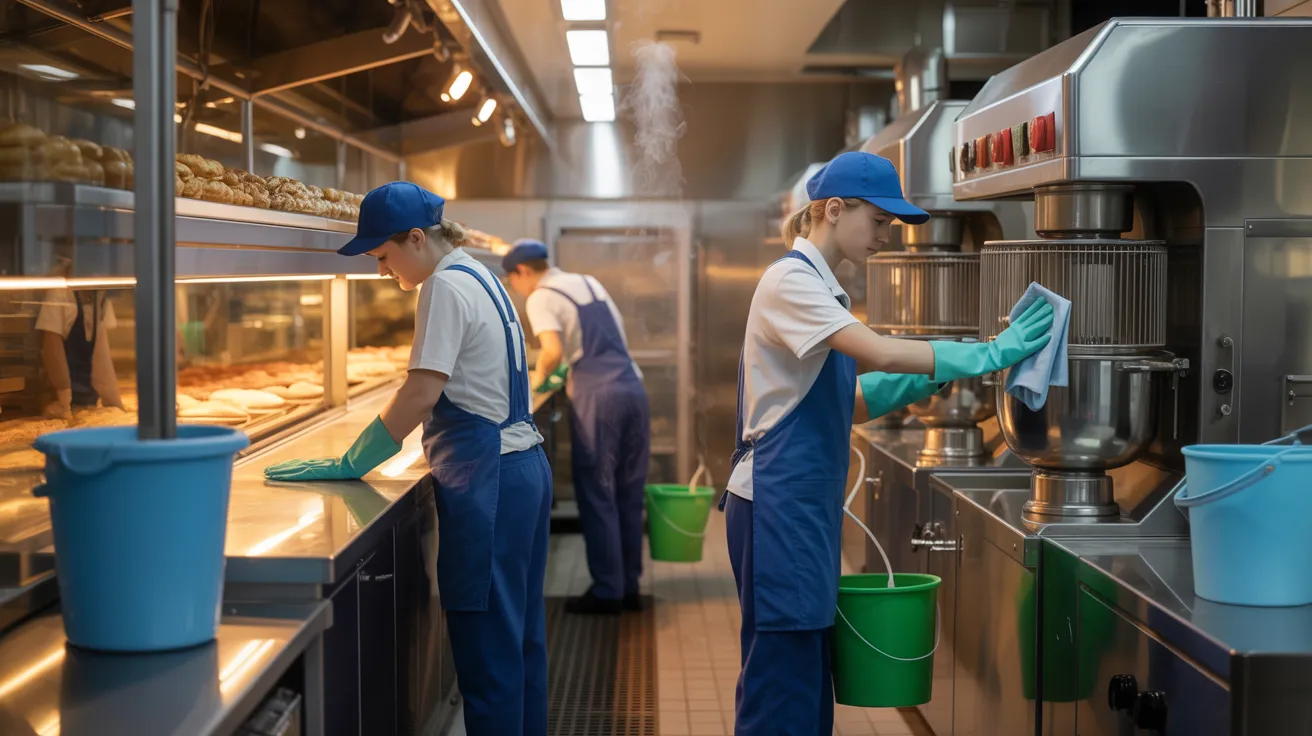
Brampton food hygiene and commercial cleaning experts help you keep restaurants, food distribution centers, bakeries, warehouses, and mobile food operations sanitized to standards. They disinfect high-touch points, food-contact surfaces, equipment, floors, drains, restrooms, and prep zones using approved chemicals, proper concentration, and documented contact times. in maintaining dining venues, commissaries, baking operations, warehouses, and mobile food operations in compliance. They disinfect high-touch points, food-contact surfaces, equipment, floors, drains, restrooms, and prep areas using certified sanitizers, proper dilution, and documented exposure durations.
Main Points
- Food safety cleaning professionals from Brampton assist restaurants, grocery departments, commissaries, warehouses, bakeries, schools, mobile vendors, and allergen-sensitive operations.
- Frequently contacted areas, food-contact equipment, kitchens, floors, drains, restrooms, and storage areas are disinfected using area-specific procedures to prevent cross-contamination.
- Proper chemical concentration, suitability, and exposure duration are verified by trained providers, with completion recorded via swabs, inspections, and remedial documentation.
- Threat, production rate, changeovers, releases, and standards must shape maintenance timelines, with regular, recurring, and periodic tasks assigned by zone.
- Liability, color-coded instruments, HACCP, sanitation knowledge, WHMIS instruction, endorsements, and audit-ready hygiene files are important supplier attributes.
Which Brampton Venues Need Food Safety Cleaning?
Brampton operations that handle, store, prepare, package, or serve food require sanitation protocols. Implement it if your business is covered by public health inspection, food premises regulations, or internal HACCP-based controls. The requirement covers restaurants, cafeterias, commissaries, grocery food departments, butcher shops, seafood counters, convenience stores, and institutional kitchens.
Compliant food safety cleaning continues to be required in distribution centers, manufacturing facilities, cold storage areas, bakery retailers, educational meal programs, banquet venues, and meal delivery services. Mobile and temporary operations are included, like catering vehicles, festival vendors, and pop-up establishments. Your facility needs written cleaning standards should your workers handle raw materials, divide prepared dishes, warm meals, or keep allergens stored. In Brampton, cleanliness stays optional; it constitutes regulatory, business, and safety compliance.
Which Areas Do Brampton Cleaning Experts Cover?
You require experienced cleaning professionals who sanitize frequently touched areas, kitchen spaces, flooring, and bathrooms to ensure compliance with food safety and health standards. These locations are prioritized due to their high cross-contamination potential, falling hazards, and health code violations.
When you know their cleaning scope, you can ensure your operation's cleaning procedures satisfy operational and regulatory requirements.
Critical High-Touch Surface Disinfection
establish a disinfection plan
reference technical specifications and health codes to maintain efficacy. Staff can employ sample analysis to confirm sterilization efficacy
Kitchens, Floors, and Restrooms
Professional cleaners in Brampton prioritize kitchens, floors, and restrooms given that each location involves specific food safety, falling hazards, and health code requirements. In industrial kitchens, you need grease removal from cooking stations, appliance surfaces, drain systems, preparation areas, and backsplashes to minimize bacterial growth and pest activity.
You should also expect documented floor care. is also provided as part of the service.
In restrooms, cleaners treat contact surfaces, bathroom hardware, partition walls, accessory dispensers, and receptacles then restock supplies and control odours. They also service restaurant moprooms, where chemical storage, sink hygiene, and drainage conditions can affect sanitation compliance and staff safety daily.
The Importance of Food Safety Cleaning in Brampton
To adhere to health code requirements and pass inspections, Brampton establishments must follow food-safe cleaning standards. You also minimize cross-contamination by cleaning and sanitizing food-contact surfaces, equipment, and high-touch areas correctly. Most importantly, you safeguard public health by lowering the risk of foodborne illness in your facility.
Sanitary Standards Adherence
Since Brampton food companies must follow rigorous sanitary regulations, your sanitation practices directly influences your capability to fulfill health codes, safeguard diners, and eliminate regulatory penalties. You must maintain clean food preparation areas, documented cleaning schedules, appropriate product handling, and documented employee protocols that align with municipal and provincial inspection expectations.
When inspectors review your operation, they analyze whether your cleaning procedures supports secure product handling, equipment sanitation, waste handling, and washroom maintenance.
Cross-Contamination Prevention
Maintaining regulatory compliance copyrights on your capacity to prevent cross-contamination during daily food handling and cleaning. You must separate raw ingredients from ready-to-eat foods, sanitize prep surfaces between tasks, and position cleaning agents away from food surfaces. Clear procedures reduce transfer risks and reinforce steady regulatory adherence.
You should implement allergen segregation to prevent major allergens from touching common work areas, storage bins, or tools. Use dedicated cutting boards, color-coded tools, and careful equipment identification so staff don't mix items during preparation or service. Mandate washing hands following uncooked proteins, shellfish, egg items, or allergen products. Change cleaning rags frequently, and verify sanitizer strength with test strips. When you train staff to follow these controls each work period, you create a cleaner, safer operation that satisfies Brampton's safety standards consistently.
Public Health Protection
Should food safety cleaning break, you don't simply encounter inspection problems—you increase the potential of contamination-related sickness impacting customers, staff, and the wider Brampton population. You also weaken your role in safeguarding community wellness, especially in busy food facilities where pathogens travel quickly through surfaces, equipment, and touchpoints.
You need cleaning protocols that remove contaminants, disinfect appropriately, and confirm results. This requires following exposure durations, selecting approved disinfectants, logging schedules, and coaching employees to satisfy health-unit expectations. These measures prevent helpful guide illness spread by decreasing microbial counts before reaching surfaces or food. Throughout Brampton, effective sanitation protects vulnerable communities, minimizes disease potential, and demonstrates your diligence. When you adhere to standards, you exceed regulations—you lower hazards and facilitate secure food handling throughout the area.
In What Ways Does Cleaning Help Achieve Food Safety Compliance?
Strict sanitation practices ensure food safety compliance by minimizing contamination hazards, limiting pathogen development, and ensuring your facility complies with sanitation requirements under HACCP-based programs and public health regulations. You confirm that food-contact surfaces are visibly clean and microbiologically controlled, enabling documented preventive controls and inspection readiness.
Cleaning initiatives additionally upgrade allergen mitigation by eliminating residues that can provoke undeclared allergen exposure.
Establishing When to Schedule Commercial Cleaning
peak production periods, product switches, spill events
Handling occasional tasks distinctly ensures improved scheduling.
What Should You Look For in Brampton Cleaning Experts?
Begin by evaluating providers based on sanitation compliance standards—not solely on budget. You should confirm that each organization comprehends CFIA, public health, and HACCP-based requirements applicable to your facility. Request insurance certificates, WHMIS compliance, staff training documentation, and oversight procedures. Assess whether technicians recognize cross-contamination risks, chemical handling protocols, and verifiable sanitation records.
You must also evaluate operational reliability and oversight. Seek references from Brampton food companies, then assess response speed, corrective processes, and communication standards. Ensure the company supports supplier audits and can provide inspection-compliant records when authorities or third parties demand verification. Verify equipment care, colour-coded tools are deployed correctly, and site-specific hazards are understood. A qualified provider safeguards compliance, product integrity, and your market standing.
What's covered in a sanitation cleaning strategy?
Document a framework that defines every sanitation task, standard, and responsibility before production begins. You should include cleaning schedules, approved products, ratios, contact periods, tools, and validation approaches for each zone, surface, and piece of equipment. Remember to add pre-operational inspections, corrective actions, and employee training requirements.
Your plan should also address cross-contamination controls, waste handling, pest-prevention measures, and documented schedules for restrooms, drains, floors, and food-contact areas. Specify how you'll separate raw and ready-to-eat processes, facilitate ingredient tracking, and maintain accurate allergen labeling through validated cleaning between product changes. You should assign accountability, document signed records, and assess results against regulatory standards, HACCP controls, and customer requirements. When gaps appear, update procedures immediately and retrain staff.
Frequently Asked Questions about the Plan
Are sanitation providers available for overnight shifts in Brampton properties?
Yes, you can schedule cleaning services to support nighttime operations in Brampton facilities. You'll coordinate overnight sanitation around operational schedules, access controls, and staffing requirements. Services generally outline overnight procedures to reduce disruption, maintain compliance, and record finished work. You should verify arrival timeframes, oversight, lockout procedures, and waste handling before service begins.
Can sanitation professionals handle hazardous incidents?
Yes, you can locate Brampton cleaning professionals providing spill response services. They manage contamination, assess dangers, contain affected zones, and begin swift decontamination to minimize exposure and prevent business disruption. You should confirm timeframes, credentials, PPE measures, and disposal methods. If your facility must meet compliance standards, pick a provider that documents events, follows procedures, and ensures audit compliance.
Are green disinfectants appropriate for surfaces contacting food?
In essence, eco-friendly disinfectants prove safe for surfaces contacting food provided you choose items marked food-safe that meet compliance requirements. Check exposure duration, dilution rates, and rinse procedures in advance of use. Natural-based solutions reduce harsh chemical exposure, although you should obtain confirmation of performance against specific pathogens. For maintaining residue free surfaces, stick to manufacturer directions precisely and confirm the disinfecting agent satisfies relevant food safety standards.
Do maintenance plans enable production fluctuations?
Without question, maintenance plans customize readily for seasonal shifts. Adapt timing, personnel, chemicals, and validation steps to correspond to production rhythms while preserving regulatory compliance. Lower operational delays by organizing cleaning amid line changes, high demand periods, and usage cycles. Further modify procedural documents, staff education, and monitoring protocols to capture periodic risks, novel allergens, or increased soil loads. Periodic assessments maintain the program functional.
Are professional cleaning companies providing employee instruction on sanitation best practices?
Absolutely, professional cleaning companies regularly deliver staff training on hygiene standards. Your team gets instruction on proper chemical use, dwell times, cross-contamination prevention, equipment disassembly, and documentation. They typically align instruction with HACCP, GMP, and CFIA or regional health authority standards. Many also perform sanitation audits to ensure adherence, identify gaps, and reinforce corrective actions. This enables you to sustain uniform standards, clear audits, and lower contamination dangers routinely.
Summary
Partnering with Brampton commercial cleaning and food safety professionals goes beyond tidying—it guarantees your operation stays inspection-compliant and your standards are defensible. From processing facilities to kitchens, each sanitized surface and organized section lessens contamination risk and prevents major expenses. By scheduling maintenance on appropriate schedules and executing a comprehensive cleaning strategy, you protect staff, clients, and your reputation. In a heavily regulated sector, clean environments can't be overlooked—they're vital to proper management.